
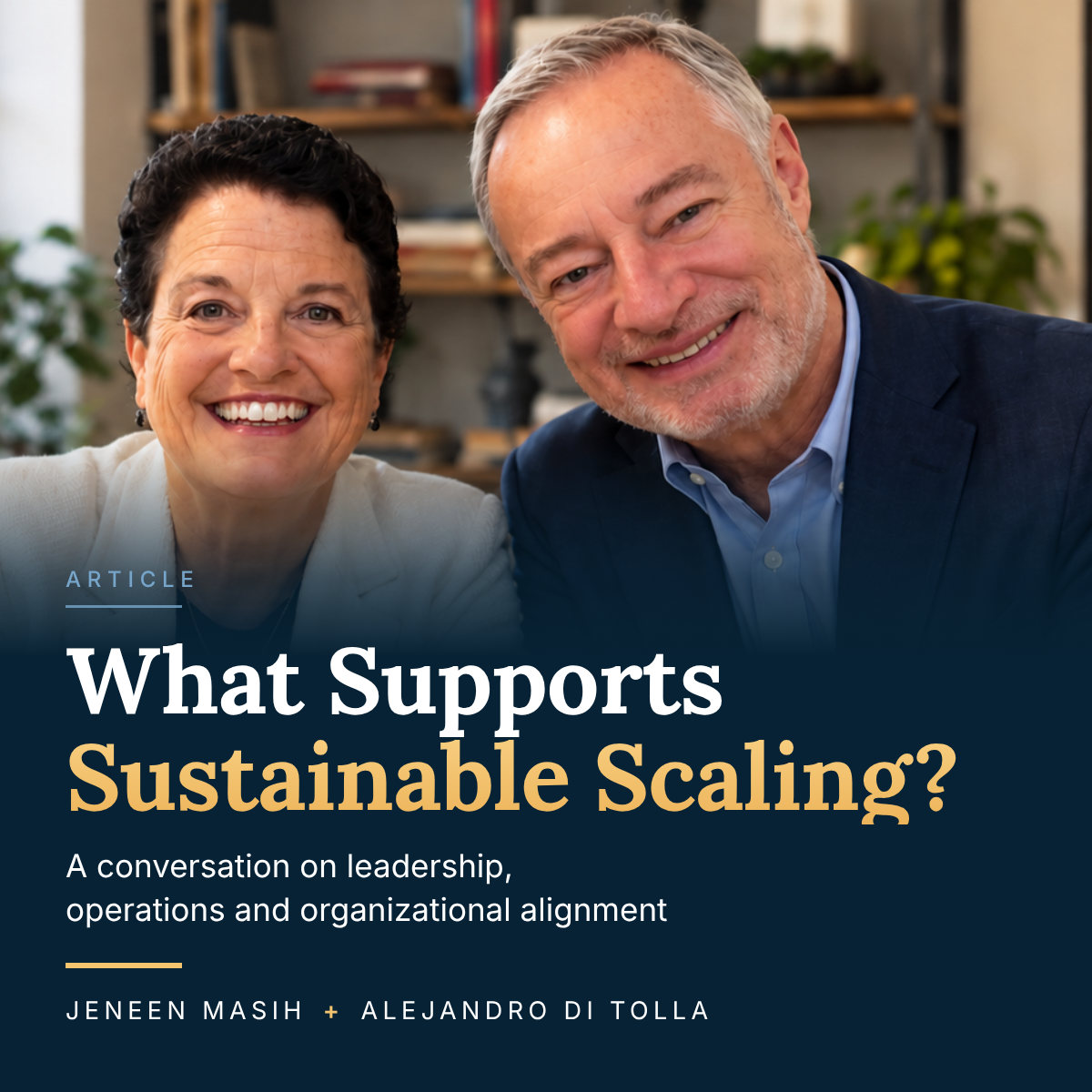
What Supports Sustainable Scaling in Today’s Dynamic Business Environment?
As organizations grow, complexity often increases faster than the systems designed to manage it. What looks like a sales problem, an execution problem, or a leadership problem may actually be a deeper issue of organizational alignment. In this conversation, Jeneen Masih and Alejandro Di Tolla explore how leadership, operations, communication, trust, and decision-making must work together to build an organization capable of scaling sustainably.
That stays close to what the article actually delivers rather than turning the excerpt into promotional copy. The article specifically argues that different functions often see legitimate but incomplete parts of the problem, and that sustainable scale requires a more systemic view.
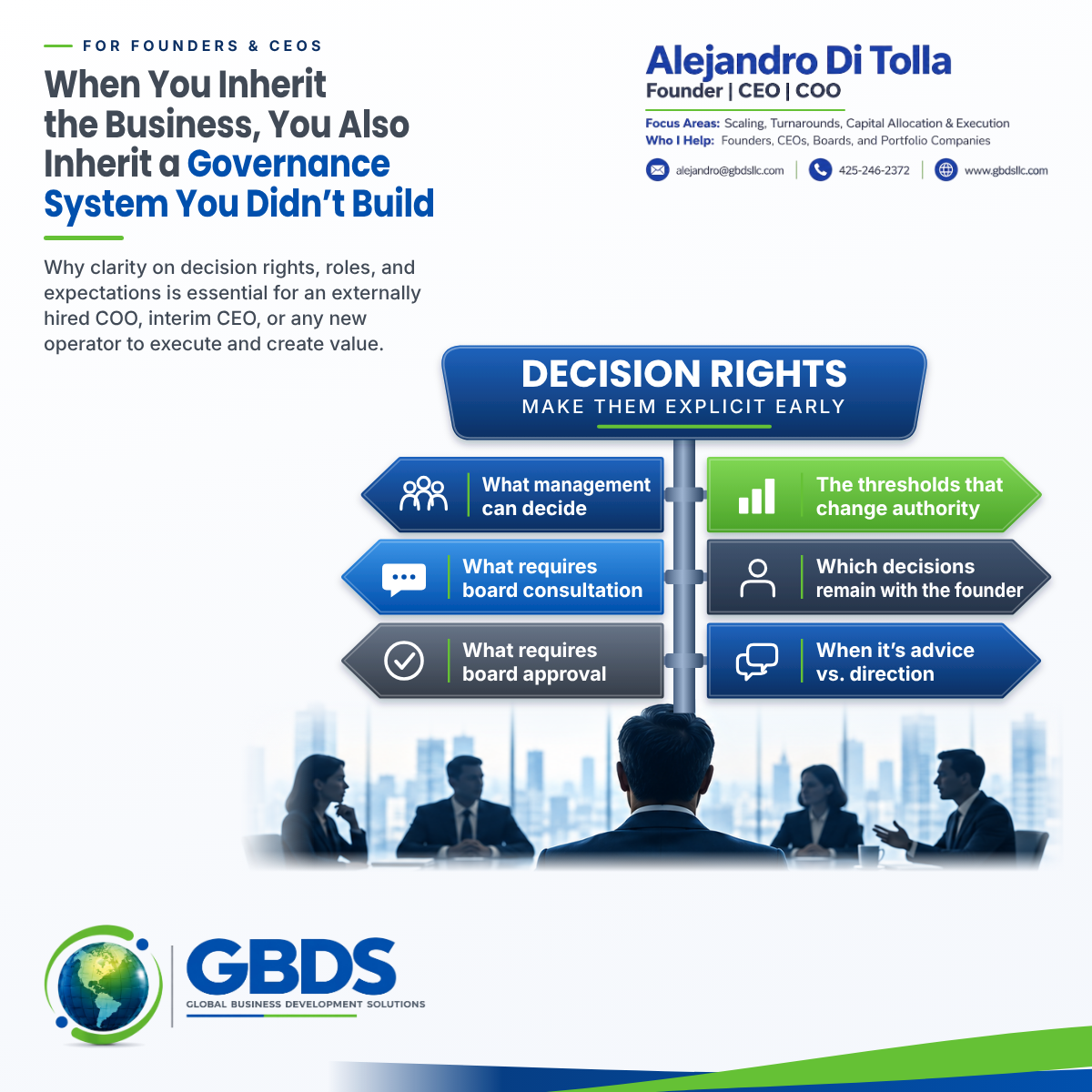
When You Inherit the Business, You Also Inherit a Governance System You Didn't Build.
When an external COO, interim CEO, or operating executive steps into a company, they inherit the strategy, expectations, relationships, and problems—but not the history that created them.
That makes governance ambiguity more than a board-management issue; under an urgent mandate, it can quickly become an execution issue. In this article, I look at why decision rights, founder involvement, board expectations, and communication thresholds need to be made explicit early—and why waiting for a crisis to discover how the governance actually works is already too late.
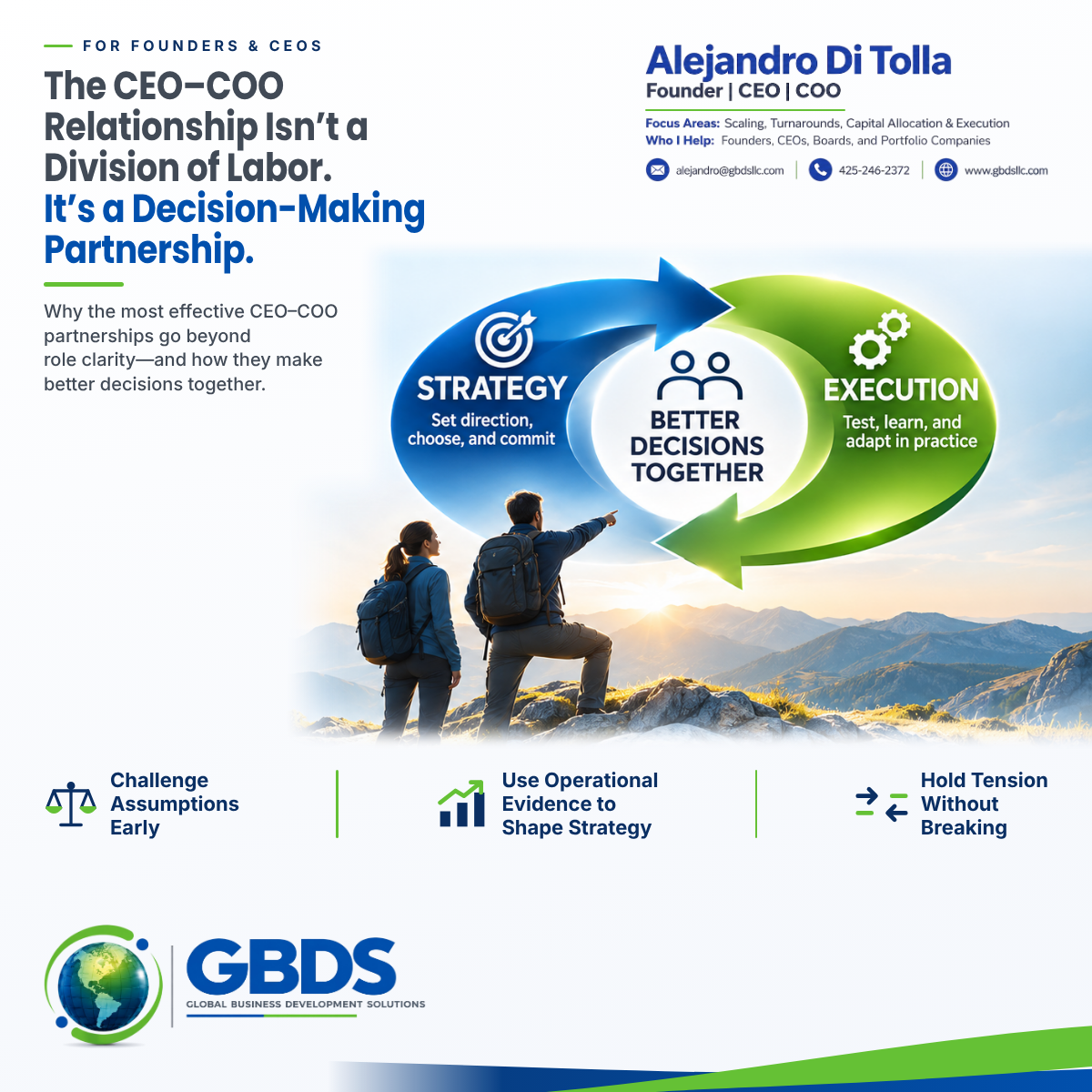
The CEO–COO Relationship Isn’t a Division of Labor. It’s a Decision-Making Partnership.
Most companies define the CEO–COO relationship by dividing responsibilities. Role clarity matters, but it is not enough. The stronger model is a decision-making partnership where strategic ambition and operational evidence can challenge each other without the relationship breaking. When that works, the COO is not simply executing strategy downstream—they are helping test the assumptions that determine whether the strategy will actually create value.